
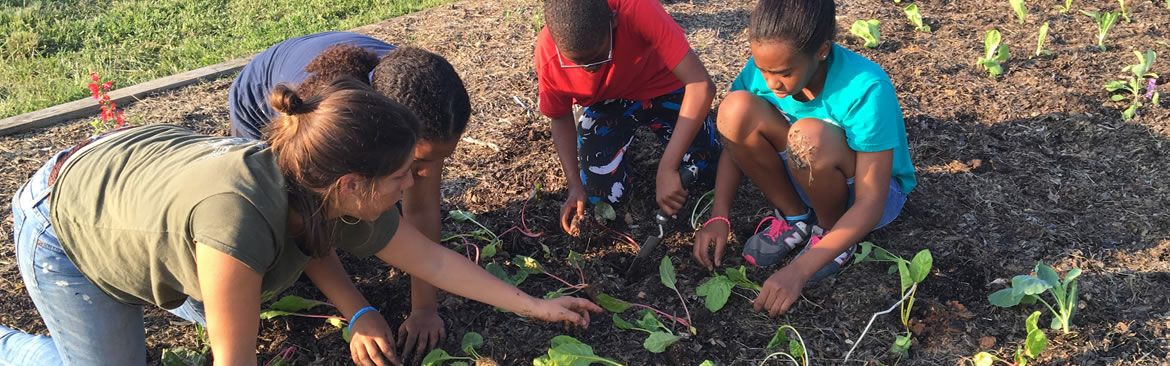

Farm to Cafeteria
go.ncsu.edu/readext?251128
en Español / em Português
El inglés es el idioma de control de esta página. En la medida en que haya algún conflicto entre la traducción al inglés y la traducción, el inglés prevalece.
Al hacer clic en el enlace de traducción se activa un servicio de traducción gratuito para convertir la página al español. Al igual que con cualquier traducción por Internet, la conversión no es sensible al contexto y puede que no traduzca el texto en su significado original. NC State Extension no garantiza la exactitud del texto traducido. Por favor, tenga en cuenta que algunas aplicaciones y/o servicios pueden no funcionar como se espera cuando se traducen.
Português
Inglês é o idioma de controle desta página. Na medida que haja algum conflito entre o texto original em Inglês e a tradução, o Inglês prevalece.
Ao clicar no link de tradução, um serviço gratuito de tradução será ativado para converter a página para o Português. Como em qualquer tradução pela internet, a conversão não é sensivel ao contexto e pode não ocorrer a tradução para o significado orginal. O serviço de Extensão da Carolina do Norte (NC State Extension) não garante a exatidão do texto traduzido. Por favor, observe que algumas funções ou serviços podem não funcionar como esperado após a tradução.
English
English is the controlling language of this page. To the extent there is any conflict between the English text and the translation, English controls.
Clicking on the translation link activates a free translation service to convert the page to Spanish. As with any Internet translation, the conversion is not context-sensitive and may not translate the text to its original meaning. NC State Extension does not guarantee the accuracy of the translated text. Please note that some applications and/or services may not function as expected when translated.
Collapse ▲Farm to Cafeteria is the process of facilitating and procuring locally grown, GAP-certified produce, meat and seafood from a grower into the school. This may be a part of the school lunch program, but could also be a part of Alternative Breakfast or the fresh fruit and vegetable program. There are a variety of pathways that this might happen, including working with food distribution companies, sourcing from a farmer directly, using NCDA’s Farm to School program as well as other methods that might encourage a student to try and eat local foods from the cafeteria line including taste tests, cooking classes with cafeteria staff and programs that connects chefs to schools.
The USDA released the survey results of their Farm to Schools program, which showed that more than 75% of NC school districts are participating. About 19% of NC school food was purchased locally, investing $34.4M back into the regional economy.
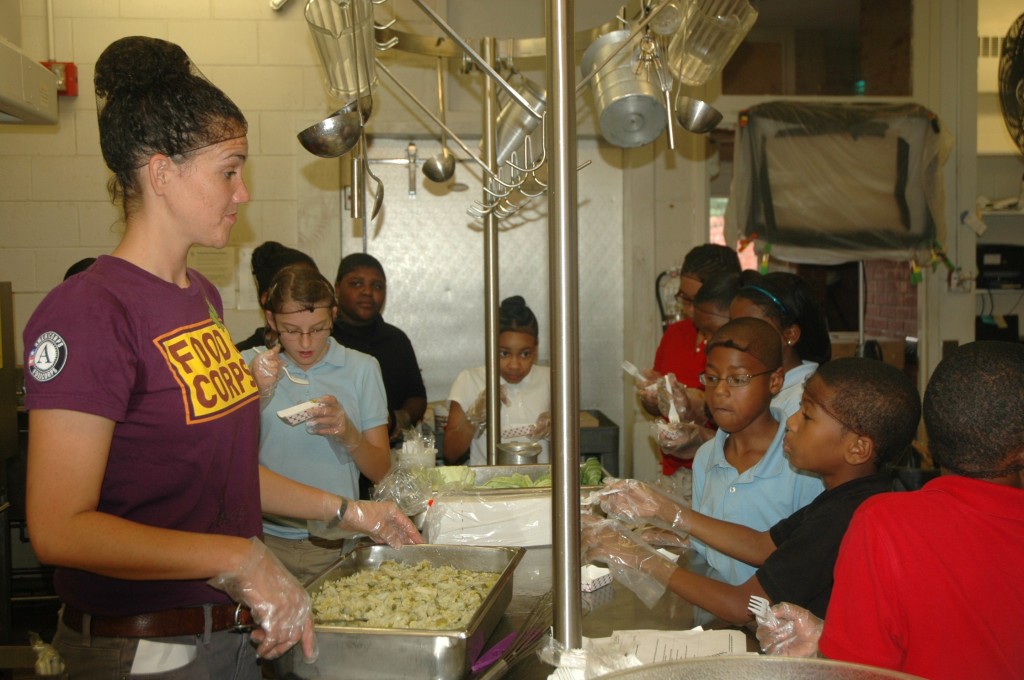
FoodCorps service member works with Warren County cafeteria staff to deliver cooking classes to students
On This Page
| Sourcing Models |
| Initiatives |
| Resources |

- Growers/Farmers selling directly to schools: GAP certified growers are eligible to sell to school districts in North Carolina. A number of school districts have successfully purchased locally grown produce through the formal bidding process or sometimes through the small purchase threshold (<$3,000).
- Food Distribution Companies: Food distribution companies work with local school districts to fulfill fresh fruit and vegetable bids and use locally procured food.
-
NC Farm to School Program: The North Carolina Department of Agriculture & Consumer Services Farm to School program supplies school cafeterias across the state with locally grown produce from North Carolina farms. The program works as a broker between school systems and a grower cooperative to provide access to fresh fruits and vegetables.
- NC Department of Instruction’s School Nutrition Services: Administers the National School Lunch Program, the Fresh Fruit and Vegetable grant program, Summer Feeding (among other programs) and is a key ally in making sure all kids have access to good, healthy food.
- Breakfast Programs
- USDA Farm to School Fact Sheets: A wealth of resources by USDA’s FNS Farm to School program that breakdown the complicated intricacies of the National School Lunch Program and other feeding programs and the possibilities for local procurement within these systems.

- The Farm to School Coalition of NC: A gathering of organizations all across the state trying to network and share best practices with Farm to School in NC.
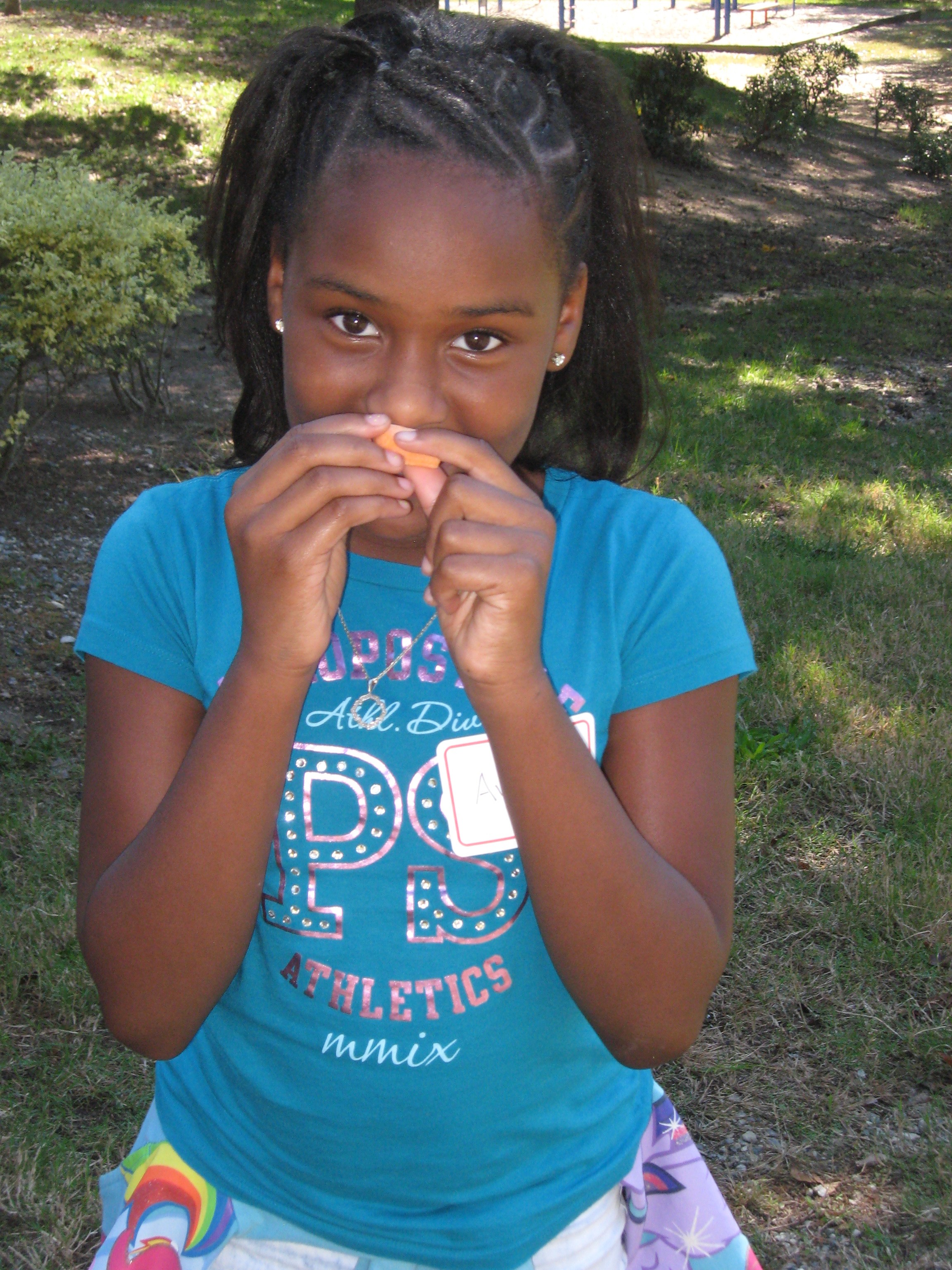
Sharing sweet potato smiles from the garden.
- Farm to Child Care Project: Wake County SmartStart in partnership with Wake County Cooperative Extension and Advocates for Health in Action have received generous funding through the John Rex Endowment to help child care facilities make changes so it becomes the norm to prepare and serve fresh, local produce for snacks and meals throughout growing seasons.
:Resources
- Taste Tests: Taste tests are a great way to introduce kids to fruits and vegetables and new dishes. This can be done in the classroom or cafeteria.
Primary Contact:
Liz Driscoll
4-H Youth Specialist
Departments of Crop and Soil Sciences, Entomology and Plant Pathology and Horticulture Science
NC State University
liz_driscoll@ncsu.edu