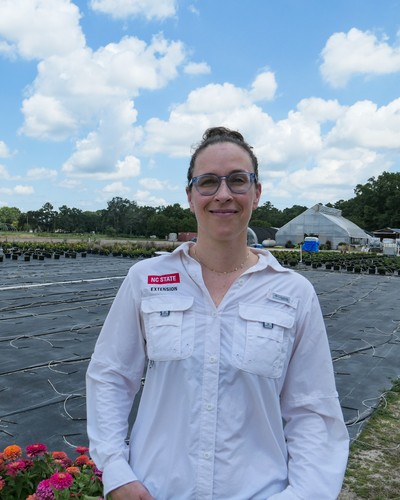
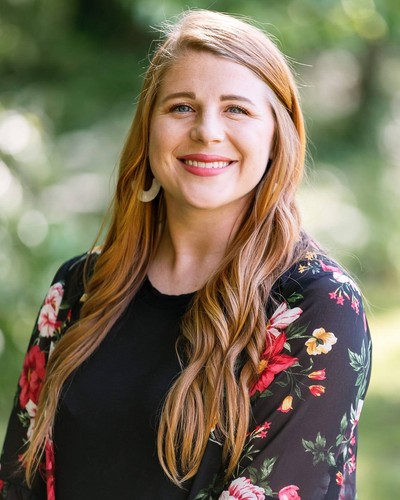
Donation Stations seek to improve access to fresh, locally-grown food while supporting the farmers who grow it. They are designed to combat local food insecurity while raising awareness that a healthy local food system must include every member of the community.
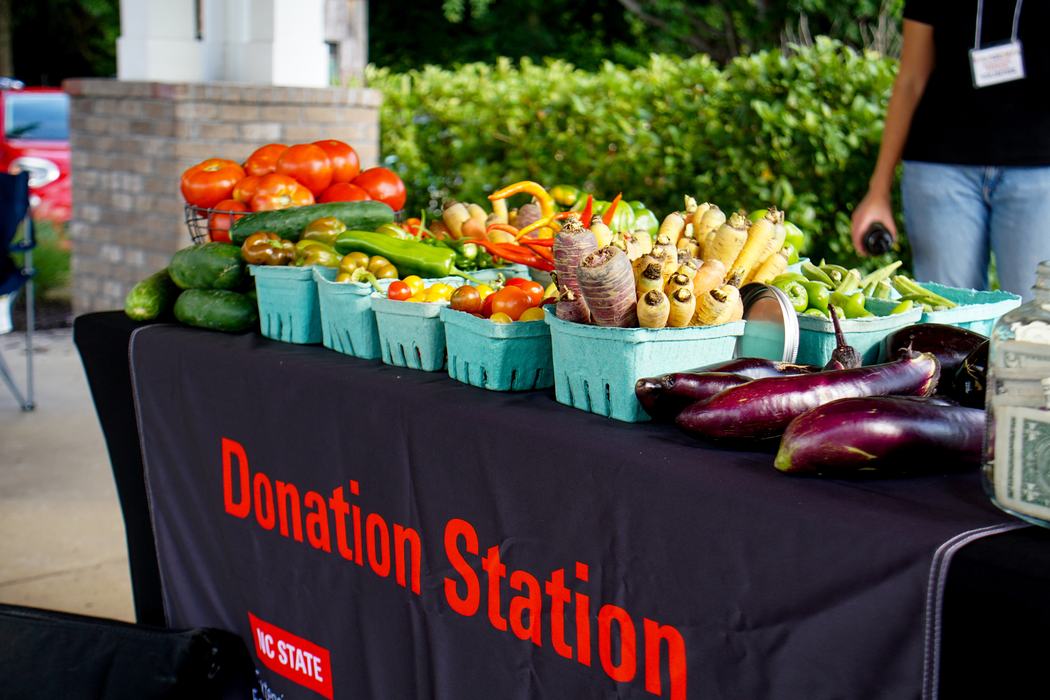
Donation Stations use a simple farmers market-based approach where volunteers collect food and monetary donations from farmers market shoppers, buy directly from farmers at the farmers market, and donate the resulting food to a local hunger relief agency. Family & Consumer Sciences Agents and their EMFVs are working to run these Donation Stations at farmers markets across North Carolina.
In 2024, fourteen counties had active Donation Stations: Cherokee, Chowan, Forsyth, Granville, Haywood, Lee, Lenoir, Lincoln, New Hanover, Pitt, Rowan, Rutherford, Union, and Wayne. Staff and volunteers hosted Donation Stations on 99 market days, collecting $6,193 in monetary donations. Combined with the pounds of produce donated from customers, a total estimated value of $14,226 ($1.88/lb) was spent in total with local farmers. 9,000 pounds of produce were donated to local food relief agencies, including pounds of produce donated by customers and pounds of produce purchased with monetary donations from customers. Volunteers gave over 597 hours of their time, estimated at a value of $17,880.15.
View the 2024 Statewide Year-in-Review here.
This incredibly successful effort has allowed fresh food to flow locally and has fostered strong community engagement. Funding for the program has come from the EMFV Program, the Local Food Program Team, and Steps to Health.
What can be donated?
The N.C. Cooperative Extension staff member implementing the Donation Station will have a conversation with the food pantry recipient and the farmers market manager leading up to the Donation Station. This will help them gain an understanding of the clients’ needs which can in turn help them when selecting foods at the market. Here is a list of potential donations:- Produce
- Eggs, if the pantry has a need and adequate storage is available
- Bread, if the pantry has a need
- Plants that produce food
- Typically meat and poultry are not items for donation as they are more costly. In addition, a Donation Station usually doesn’t have adequate refrigeration to hold meat and poultry.
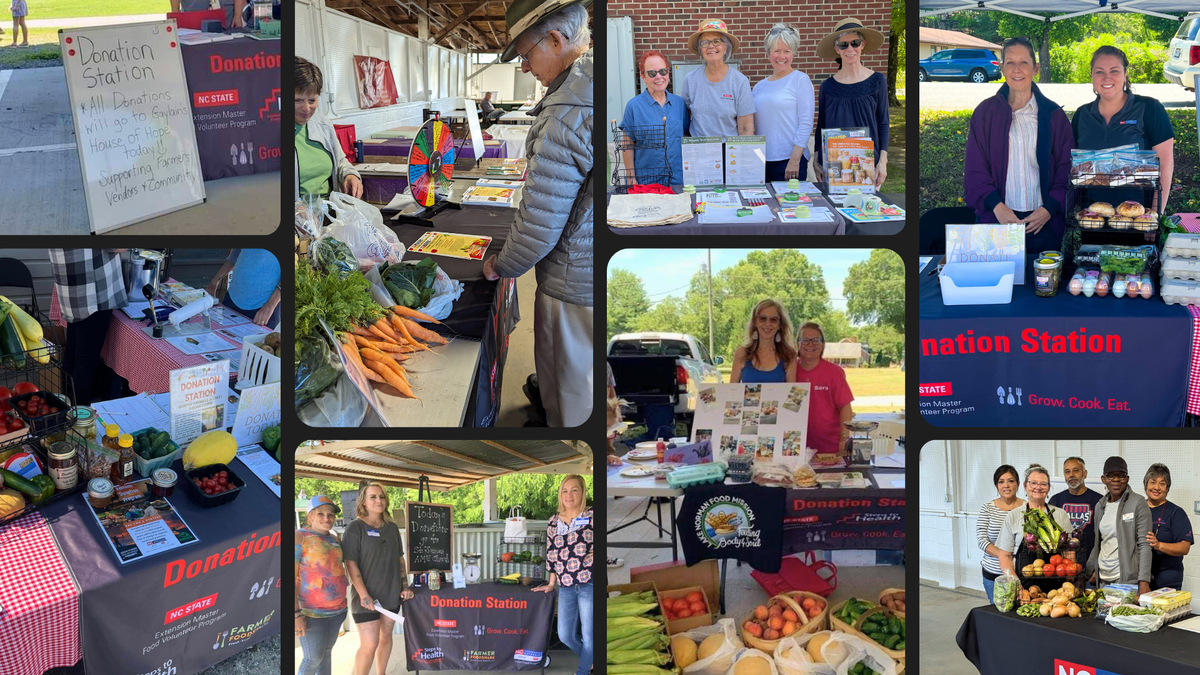
- All donations stay local to the market and your community
- Donation Stations are completely volunteer run, meaning there are no overhead fees for this program
- Farmers and farmers markets gain positive public awareness through community and media outreach
- It’s a win for everyone - farmers get what their produce is worth, community members most at need get fresh, local produce that they might not otherwise be able to access
"Volunteers are vital to the success of [these programs]. Not only are they essential for operating the Donation Station tables, but they play a critical role in communicating the need for access to fresh, healthy food to combat food insecurity and hunger. Volunteers also act as ambassadors - connecting people with their local food systems and farmers."
-Amy Mead, N.C. Cooperative Extension
If you have questions regarding Donation Stations, please contact EMFV Program Manager, Morgan Marshall, at morgan_marshall@ncsu.edu.